
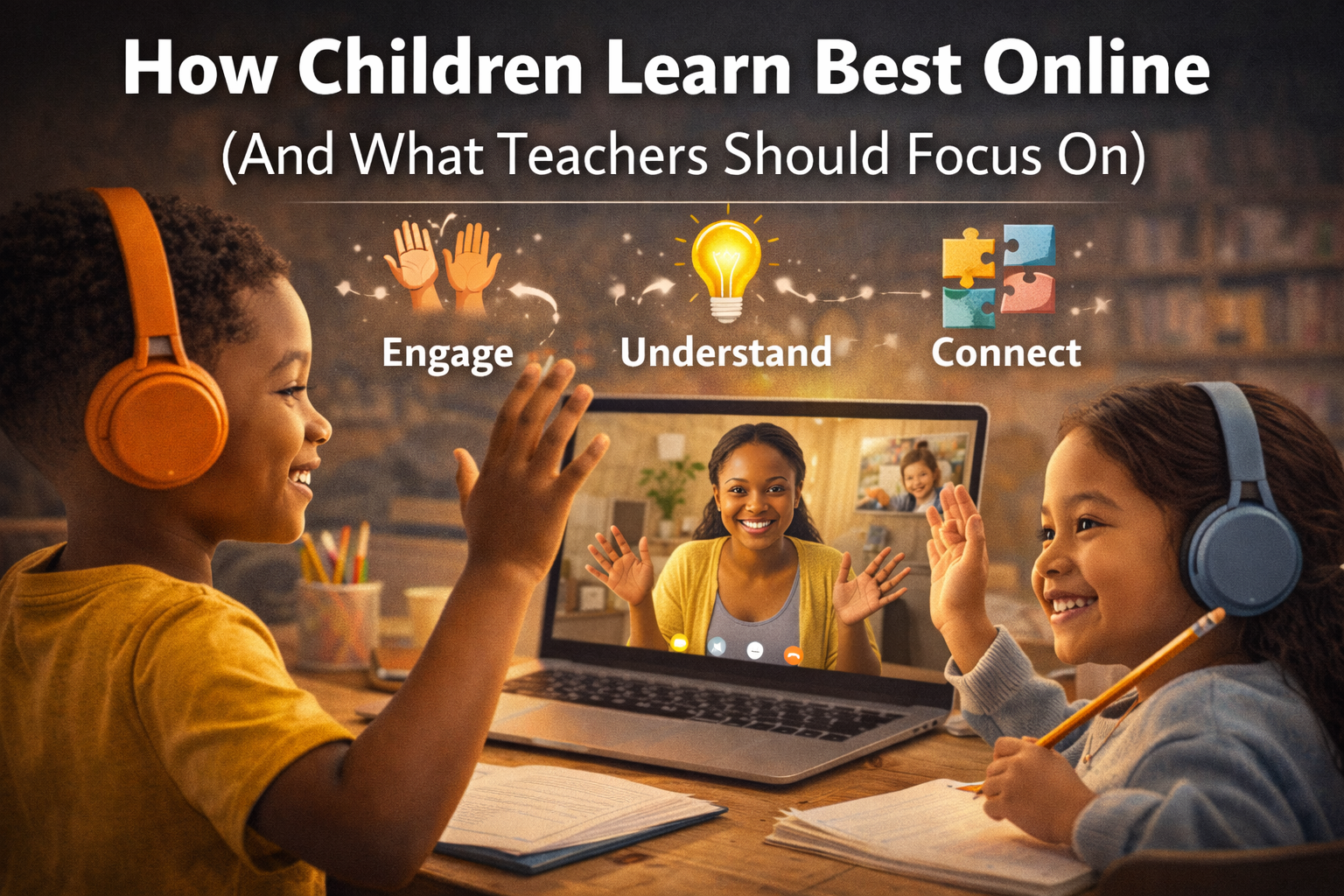
Online learning has opened doors for children around the world. From language classes to cultural education and academic support, learning is no longer limited to a physical classroom. However, one important truth remains: children do not learn simply because content is available online.
They learn when the experience is designed around how their minds work.
Understanding how children learn best online helps teachers and parents shift from “just teaching” to intentional learning.
1. Attention Comes Before Information
Children cannot learn what they are not paying attention to. In online learning, distractions are everywhere—screens, sounds, and surroundings. Teachers must first win attention before delivering content.
This means using short lessons, visual cues, questions, stories, and movement where possible. When a child is mentally engaged, learning happens naturally.
What teachers should focus on: engagement before explanation.
2. Children Learn Better Through Interaction, Not Lectures
Online learning fails when it becomes a one-way talk. Children learn best when they are allowed to speak, respond, think aloud, and participate.
Asking questions, encouraging discussion, using games, and giving children time to express themselves keeps their brains active.
What teachers should focus on: interaction over long explanations.
3. Understanding Matters More Than Speed
Many online classes rush through topics to “cover the syllabus.” But children learn best when they understand, not when they memorize quickly.
Online learning should allow children to pause, reflect, practice, and apply what they are learning in simple ways.
What teachers should focus on: clarity, repetition, and practice.
4. Learning Becomes Easier When It Connects to Real Life
Children learn faster when lessons relate to their daily lives, culture, language, and experiences. This is especially important in online learning, where emotional connection may be weaker.
Using familiar examples, cultural references, stories, and everyday situations helps children see learning as meaningful, not abstract.
What teachers should focus on: relevance and connection.
5. Emotional Safety Supports Learning
Children learn best when they feel safe, seen, and encouraged. Fear of making mistakes shuts down learning, especially online.
Teachers who create a supportive environment where mistakes are part of learning build confident learners.
What teachers should focus on: encouragement, patience, and positive feedback.
6. Teaching Children How to Learn Is the Real Goal
Beyond subjects, online learning should help children develop focus, thinking skills, curiosity, and independence. These are lifelong skills.
When children learn how to listen, ask questions, think critically, and stay engaged, they succeed both online and offline.
What teachers should focus on: learning skills, not just content.
Final Thought
Online learning works best when teachers understand that children are not empty containers to be filled, but minds to be guided.
When lessons are engaging, interactive, meaningful, and supportive, online learning becomes powerful, and children don’t just learn, they thrive.


